

For a while now, this little corner of the internet has been quiet.
No sharks, no corrupt politicians, no rants about bureaucracy, no musings about expats, mangoes, or that special kind of crazy you only find in Costa Rica at 3 a.m. in a karaoke bar.
Silence.
I owe you an explanation.
The short version is this: I almost died in Costa Rica, spent months wired to machines in a Florida ICU, woke up on “bonus time,” and then disappeared into the slow, holy work of trying to understand what that meant. Out of that long, broken, beautiful stretch of road came a book:
The Broken Road to Purpose.
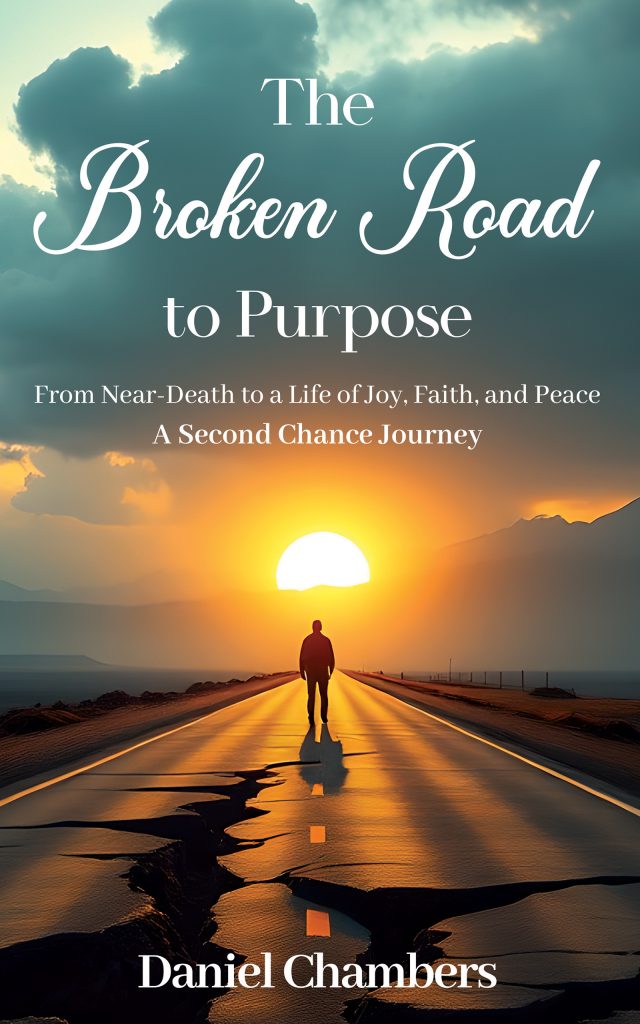
And today, as I come back to The Costa Rican Times and restart regular publishing after Thanksgiving, I want to tell you why I wrote it, who it’s for, and why I believe it might matter for you—whether you’re reading this from a beach in Jacó, a coffee farm in the Central Valley, or an apartment somewhere in the concrete jungle wondering if there’s more to life than traffic and notifications.
You’ll find the book wherever you usually get your eBooks and online books—Amazon, Apple Books, Barnes & Noble, and more—and yes, here’s a direct link so you don’t have to ask Google:
The Broken Road to Purpose on Amazon.
But first, let’s talk about that broken road.
Why The Costa Rican Times Went Quiet
If you’ve been reading this newspaper for a while, you know we’ve never pretended Costa Rica is just waterfalls and smiling sloths. We’ve talked about corruption, environmental issues, lifestyle realities, broken systems, and broken people—including me.
For years I wrote about “The Broken Road” here—my own messy journey of faith, failure, second chances, and the strange grace of living between paradise postcards and real pain.
Then, suddenly, the articles slowed down.
It wasn’t because I ran out of things to say. It was because my life turned into one long, unplanned “breaking news” story. One day I was just another gringo in Costa Rica; the next I was on the floor, my body collapsing in a way nobody saw coming.
There are parts of that story the doctors can explain and parts they can’t. What I remember clearly is this:
- The sense that something inside me had snapped.
- The blur of ambulances, white walls, and the strange cold of hospital air.
- Waking up later in Florida, tethered to machines, watching my family’s worried faces and realizing I might not get another shot at this life.
For months I lived in that grey zone between life and death, hope and despair, gratitude and fear. Then, miraculously, I got to come back.
I call it bonus time.
Bonus time sounds fun—like extra vacation days or a free dessert—but it’s also terrifying. Because once the doctors say, “You should have been dead,” you can’t just go back to scrolling your phone like nothing happened.
You start asking different questions:
- Why am I still here?
- What is God trying to say in this?
- What actually matters, and what is just noise?
- How do I live at peace on purpose when life is loud, fragile, and out of my control?
Those questions pulled me away from regular publishing for a season. Not because I stopped caring about Costa Rica or about you—but because I needed to sit with God, with my own soul, with the mess of my story, and listen.
The Broken Road to Purpose is what came out of that listening.
What “The Broken Road to Purpose” Is (and What It Isn’t)
Let me get this out of the way: this is not a “10 Steps to Fix Your Life in a Weekend” book.
If you want a quick-fix self-help book that promises you inner peace in 7 days if you just drink more green juice and repeat affirmations into your bathroom mirror, my book will irritate you.
This one is slower. Messier. More honest.
What it is:
- A field guide to living at peace on purpose in a world that will never be quiet.
- A testimony of near-death in Costa Rica and long months in a Florida ICU—and what God did with that wreckage.
- A collection of stories, prayers, and practices that helped rebuild a life from the inside out.
- An invitation to people who are anxious, burned out, disappointed with religion, or secretly exhausted by pretending they’re “fine.”
I write openly about:
- Boundaries – Learning it’s not unloving to say “no” to what drains your soul; it’s actually one way to say “yes” to God’s purpose.
- Noise – The constant barrage of alerts, opinions, and outrage that keeps us from hearing the still, small voice of God.
- Forgiveness – Not as a spiritual performance, but as a hard, slow, bloody process that frees you from the prison of resentment.
- Self-forgiveness – The part nobody likes to talk about, where you have to face your own failures without hiding behind excuses or shame.
- Wise risks – Learning to step forward again after life has knocked you flat, trusting that God is not done writing your story.
- Learning to accept love – Maybe the hardest part of all: letting yourself be loved when you don’t feel like you deserve another chance.
If you’ve followed my “Broken Road” pieces here in The Costa Rican Times, you’ll recognize the tone—honest, occasionally sarcastic, uncomfortably vulnerable, and stubbornly hopeful. Think of the book as all those articles grew up, got stitched together, and were handed a microphone and a coffee.
A Near-Death Story in a Country People Call “Paradise”
Let’s talk about Costa Rica for a second.
People come here to escape. They come to chase freedom, surf, yoga retreats, or business opportunities. They come because the brochure version of Costa Rica whispers, “If you can just get here, everything will finally feel okay.”
I get it. I’ve said those words myself.
But here’s the uncomfortable truth: you can live in “paradise” and still be a prisoner inside your own mind.
You can watch sunsets over the Pacific and still feel like you’re drowning.
You can drink world-class coffee and still wake up with a knot of anxiety in your chest.
You can move across the world and find that the loudest, hardest part of your life came with you: you.
When my body crashed in Costa Rica, it destroyed the illusion that I could outrun my inner chaos by changing my surroundings. The palm trees didn’t save me. The postcard didn’t save me. The pura vida bumper stickers didn’t save me.
God met me in the mess instead.
He met me in hospital rooms, on gurneys, in late-night prayers that sounded more like groans than poetry. He met me through doctors and nurses, through friends who showed up with shaky prayers and strong coffee, through family who refused to give up.
That’s why this book is deeply tied to Costa Rica. Not just because the collapse happened here—but because this country, with all its beauty and brokenness, became part of the story God was writing in my life.
If you’re reading this from somewhere in Costa Rica, you need to hear this:
You don’t have to pretend your life is a postcard. God can work with your real story—the one with the fear, the divorce, the bad decisions, the addictions, the unpaid bills, the medical chart that reads like a horror script.
He’s not intimidated by your broken road. He specializes in them.
How God Used the ICU as a Classroom
No one signs up voluntarily for an ICU discipleship program.
I wouldn’t recommend it as a spiritual growth strategy.
But when you’re lying in a hospital bed, connected to machines that beep and hiss, you start to see things differently:
- You see how fragile your body really is.
- You see how fast your priorities can change.
- You see how small your control actually was, even on your “good” days.
- You see how much of your mental real estate was taken up by things that never really mattered.
In that ICU, God started to untangle my life.
He didn’t do it all at once. This wasn’t a Hollywood scene with dramatic background music and instant transformation. It was more like physical therapy for the soul—painful, slow, and, at first, deeply annoying.
He began asking me:
- Why do you say yes to everything and everyone until you collapse?
- Why do you let other people’s opinions dictate your peace?
- Why do you treat yourself like a machine instead of a person I love?
- Why do you give the news, social media, and other people’s drama more authority than My voice?
The answers were not flattering.
But they were freeing.
The book walks through some of those internal surgeries—where God gently, and sometimes not so gently, went after my people-pleasing, my anxiety, my perfectionism, my need for control.
If you’ve ever thought, “I know God loves me in theory, but I don’t feel it in my bones,” you’re my people. That’s exactly where I was. God had to meet me in that bed and re-teach me what love looks like when you can’t earn it, perform for it, or outrun it.
That’s the heart of The Broken Road to Purpose: God is still writing your story, even when you think the credits have started to roll.
Peace on Purpose (When the World Won’t Shut Up)
You don’t need me to tell you the world has lost its mind.
Our phones are alarm clocks for anxiety. Every app screams, “Look at me!” The news runs on outrage. Social media rewards our worst impulses. Even in beautiful places like Costa Rica, we can bring our mental chaos with us and baptize it in a different language.
Here’s the problem: peace doesn’t just happen. Not in this world.
If you want to live with a sane mind and a settled heart, you have to choose it on purpose.
That’s one of the reasons I wrote the book like a field guide. I didn’t want to just say, “Trust God more!” and leave you hanging. I wanted to offer practices that helped me breathe again when my life felt like a siren.
Some of the practices I share:
- Naming your “waiting rooms” – Those seasons between diagnosis and treatment, between breakup and healing, between job loss and new direction. Naming them shrinks the monsters.
- Setting inputs limits – Deciding when and how you engage with news, social media, and other people’s chaos, so your brain doesn’t live in permanent emergency mode.
- Simple blessings for hard days – Tiny prayers and phrases you can hold onto when you don’t have a full sentence of faith left.
- Micro–acts of courage – Choosing one small, brave thing a day that nudges you toward purpose instead of paralysis.
- Forgiveness as a process, not a performance – Giving you permission to move at the speed of honesty, not the speed of religious pressure.
Are these magic? No.
Are they practical? Yes.
Combined with Scripture, honest prayer, and a realistic view of your own limits, they are small, doable ways to walk toward peace—even when the world refuses to quiet down.
Love: The Point of the Whole Thing
If I had to summarize the book in one word, it would be love.
Not the sentimental Pinterest version. Not the kind that disappears when it becomes inconvenient. I mean the gritty, patient, stubborn love of God that:
- Follows you into ICU rooms.
- Sits with you in anxiety attacks.
- Walks with you through bad decisions and their consequences.
- Keeps knocking even when you keep running.
Along the broken road, I had to learn three kinds of love:
- Love of God
Not as a distant concept, but as a present Father who cared about every breath, every setback, every small victory. - Love of others
Letting people in. Letting them carry me when I couldn’t carry myself. Accepting that “independent” is not a fruit of the Spirit. - Love of myself
Not in a selfish way, but in a way that finally believed: if God isn’t ashamed to love me, maybe I can stop being ashamed of myself, too.
That journey of love is all over the pages of The Broken Road to Purpose. It’s the thread that ties together my near-death in Costa Rica, my ICU survival, my spiritual wrestling, and the quiet, ordinary life I’m trying to live now—one where I trust that God is in control even when I can’t see the whole story.
Why I’m Bringing This Book Back to The Costa Rican Times
So why talk about this book here? Why bring it to The Costa Rican Times instead of just launching it quietly and moving on?
Because this newspaper is part of my story.
This site has always been a weird little hybrid: part news, part opinion, part therapy, part confession booth. We’ve told the truth about Costa Rica when the tourist brochures were lying. We’ve poked at corruption. We’ve wrestled with spiritual questions. We’ve laughed at ourselves.
You, the readers, have walked with me through many of the early chapters of this “broken road.” Some of you wrote emails after those old articles that kept me going. Some of you shared your own stories of loss, addiction, divorce, burnout, disillusionment, and grace.
In a sense, this book is me coming back to say:
- “Here’s where the story went while we were off the air.”
- “Here’s what God did with the parts I didn’t have words for yet.”
- “Here’s the longer version of the testimony you watched unfold in real time.”
I also want to plant a stake in the digital ground and say clearly:
We’re back.
The Costa Rican Times will begin publishing again—articles, commentary, reflections, and yes, more pieces from the “broken road” and what it looks like to seek peace in this crazy, beautiful, infuriating world.
Some upcoming themes you can expect:
- Life after crisis: when everyone else moves on but your heart hasn’t.
- Finding peace as an expat (or would-be expat) in a world of instability.
- Setting digital boundaries without becoming a hermit.
- Faith in an anxious age—how to walk with God without losing your mind.
- Stories from readers walking their own broken roads (yes, that might be you).
If this book is the long-form version of my testimony, The Costa Rican Times will continue to be the ongoing conversation—where we take those themes and work them out together in real time.
Who This Book Is For (Spoiler: Probably You)
You might be thinking, “Okay Dan, but is this book actually for me?”
Let me answer that with a few questions:
- Have you ever looked around at your life and thought, “This is not how it was supposed to go”?
- Have you ever sat in a waiting room—medical, emotional, financial, relational—and wondered if God had forgotten your file at the bottom of the stack?
- Have you ever moved to a “paradise” place or chased a dream, only to find your inner storms came with you?
- Have you ever felt like you believe in God but don’t know how to rest in Him?
- Have you ever secretly thought, “Everyone else seems to know how to do this ‘peace’ thing; I must be broken”?
If you answered yes to any of those, this book is for you.
It’s for the burnt-out pastor and the disillusioned church kid.
It’s for the anxious entrepreneur and the exhausted parent.
It’s for the expat trying to rebuild a life in Costa Rica and the local wondering how to keep your faith when the system feels rigged.
It’s for skeptics who are willing to risk that maybe—just maybe—God is kinder than the religion that hurt them.
You don’t need to be “religious” to read it. You just need to be human and a little tired of pretending you’re fine.
Back on the Road Together
Writing The Broken Road to Purpose cost me something.
It required going back through medical records, diaries, and memories I honestly would have preferred to bury. It meant telling the truth about my failures, fears, and the ways I’ve hurt others. It meant exposing how much I still don’t have figured out.
But it also gave me something: a deeper peace, a steadier trust in God, and a renewed sense of purpose for whatever time I have left on this planet.
Now I want to spend that time wisely.
That means more writing here. More honesty. More wrestling. More hope.
If the book resonates with you, I’d love for you to grab a copy, highlight it, throw it across the room if you need to, then pick it up again and keep going. Share it with a friend who is barely hanging on. Talk about it in your church or small group or over coffee at that café where the barista already knows your order.
Here’s that link again if you want an easy place to start:
The Broken Road to Purpose on Amazon.
And if you’ve missed The Costa Rican Times… we’ve missed you too.
Thanks for sticking around through the silence.
Thanks for reading the early chapters of this story.
Thanks, in advance, for walking with us into whatever comes next.
The road is still broken.
God is still in control.
And we’re still walking—together.
